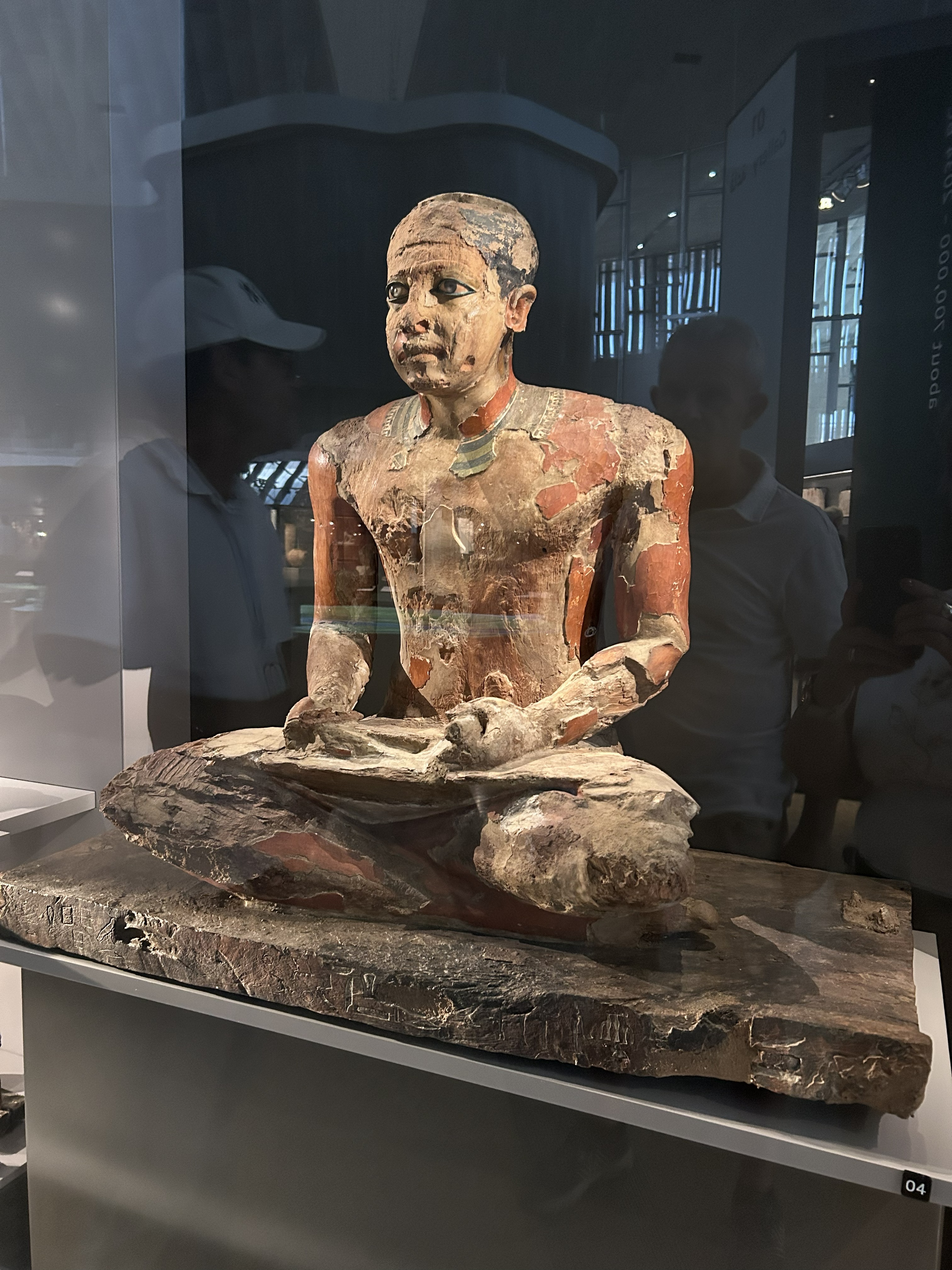
The scribe who made such an impression on me
Among the photographs from my visit to the Grand Egyptian Museum, the scribe stayed with me: a figure that makes everyday life in an ancient civilisation feel remarkably close.
I first visited Turin’s Museo Egizio at the age of six, with my father. I could not have imagined how far that childhood memory would take me.
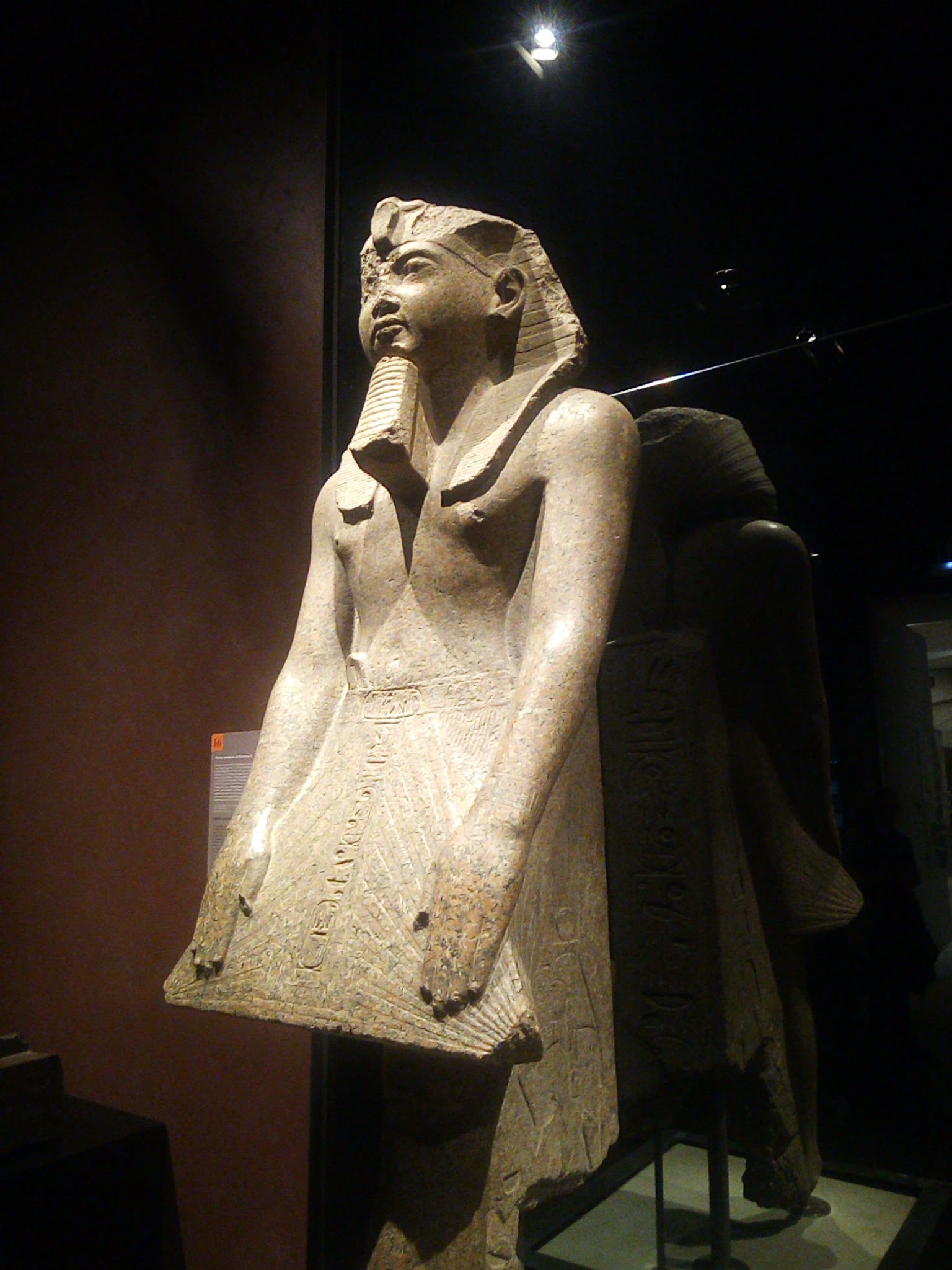
“When I grow up, I’ll go and see the real ones.”
I was six when my father took me to the Egyptian Museum in Turin. I was astonished by the statues and ancient objects from such a distant civilisation, right there in my own city.
As we left, I announced, “When I grow up, I’ll go and see the real ones.” My father immediately replied, “But those were real!” The sentence became a family joke. Everyone teased me for years, imagining I thought the statues were plastic and the artefacts were cardboard.
Perhaps at six I simply lacked the words to explain. I wanted to see the places those treasures had come from: Egypt, its temples and landscapes. I never lost that desire.
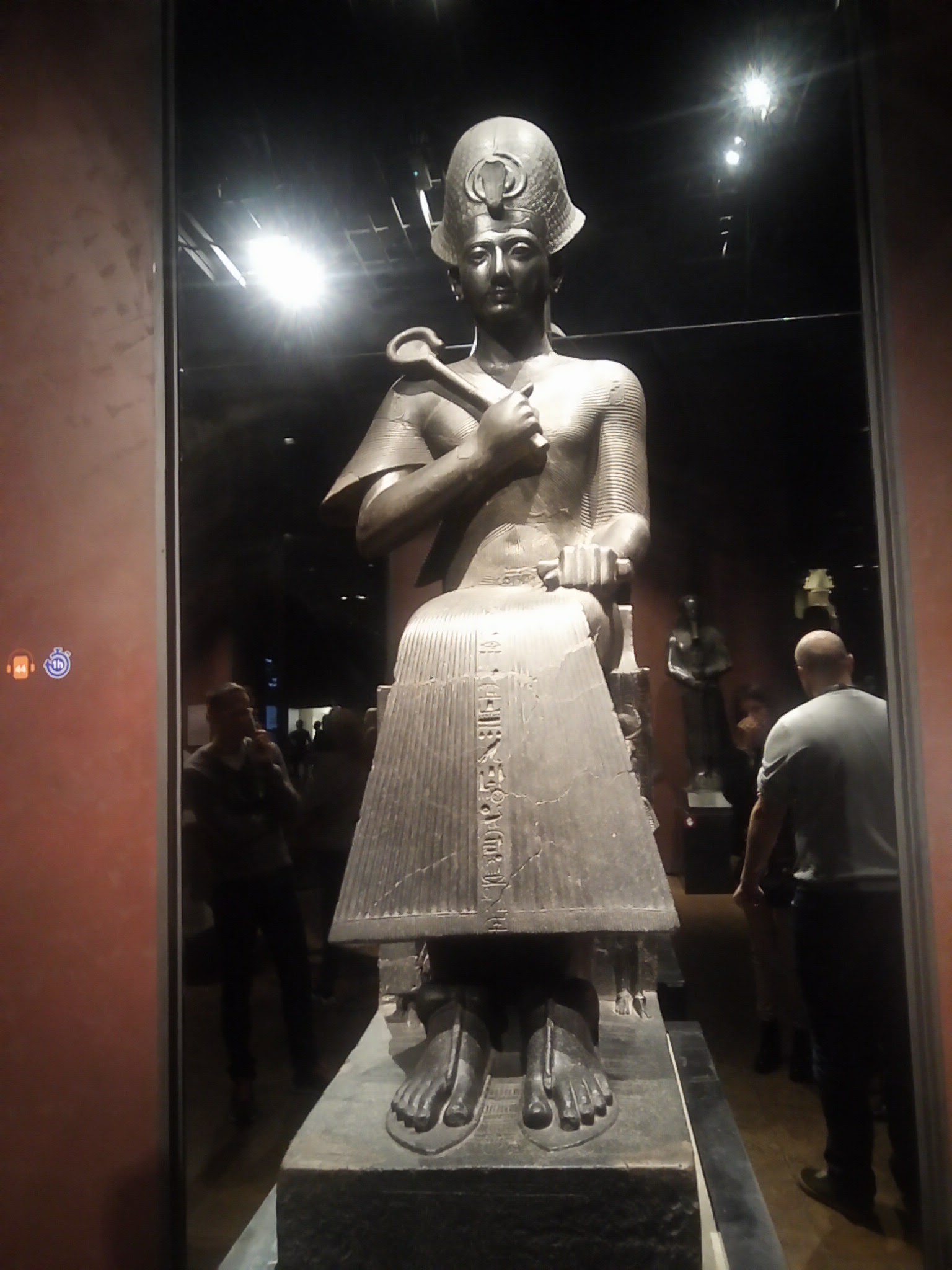
Founded in 1824, Turin’s Museo Egizio is the world’s oldest museum dedicated entirely to ancient Egyptian culture. It was established after King Carlo Felice acquired the collection assembled by Bernardino Drovetti. The museum opened to the public in 1832.
Early twentieth-century excavations in Egypt, including those led by Ernesto Schiaparelli, enriched the collections. Statues, coffins, papyri and everyday objects tell the story of ancient lives and beliefs.
The museum celebrated its bicentenary in 2024. Its importance needs no global ranking.
Museum history ↗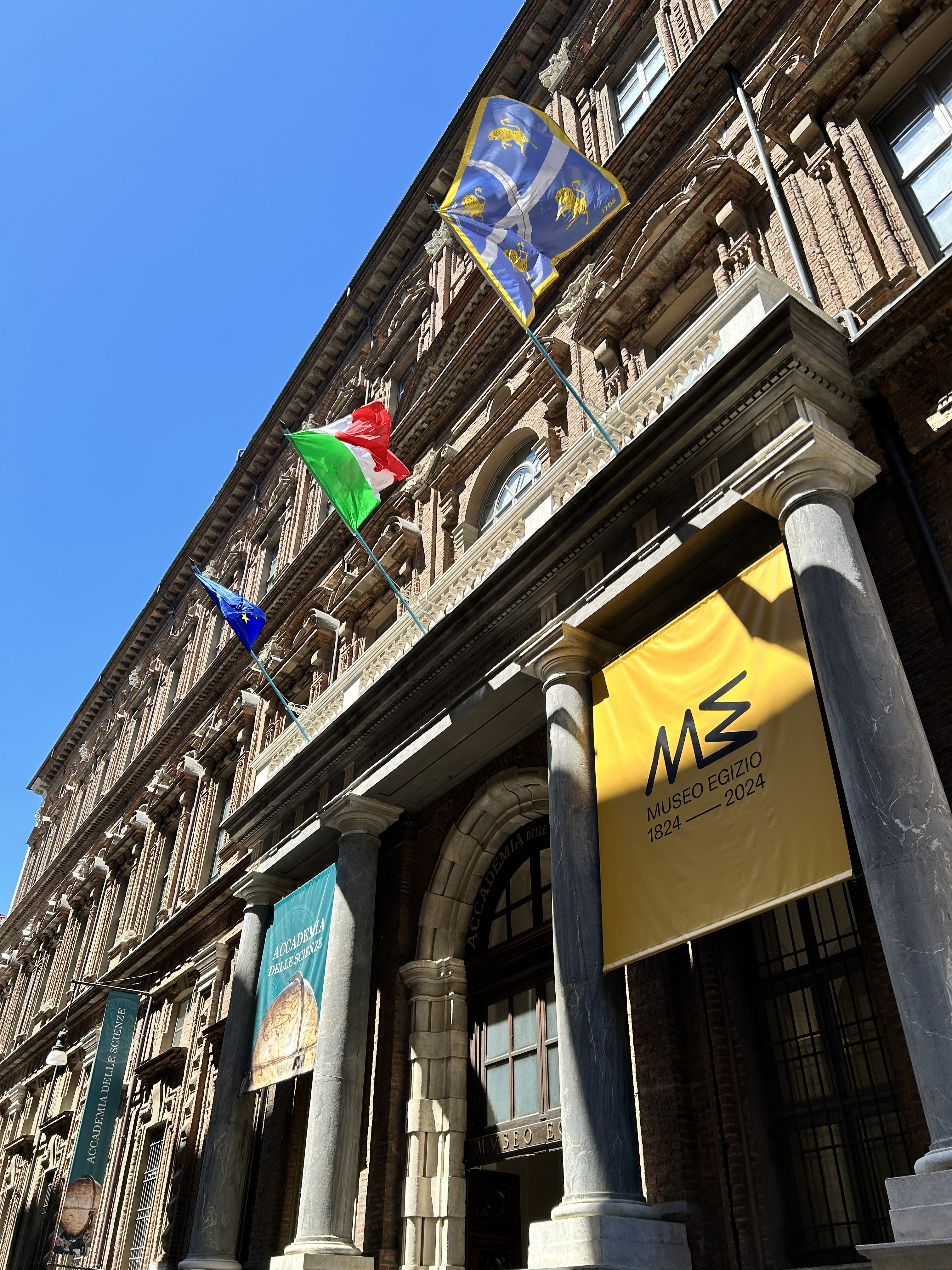
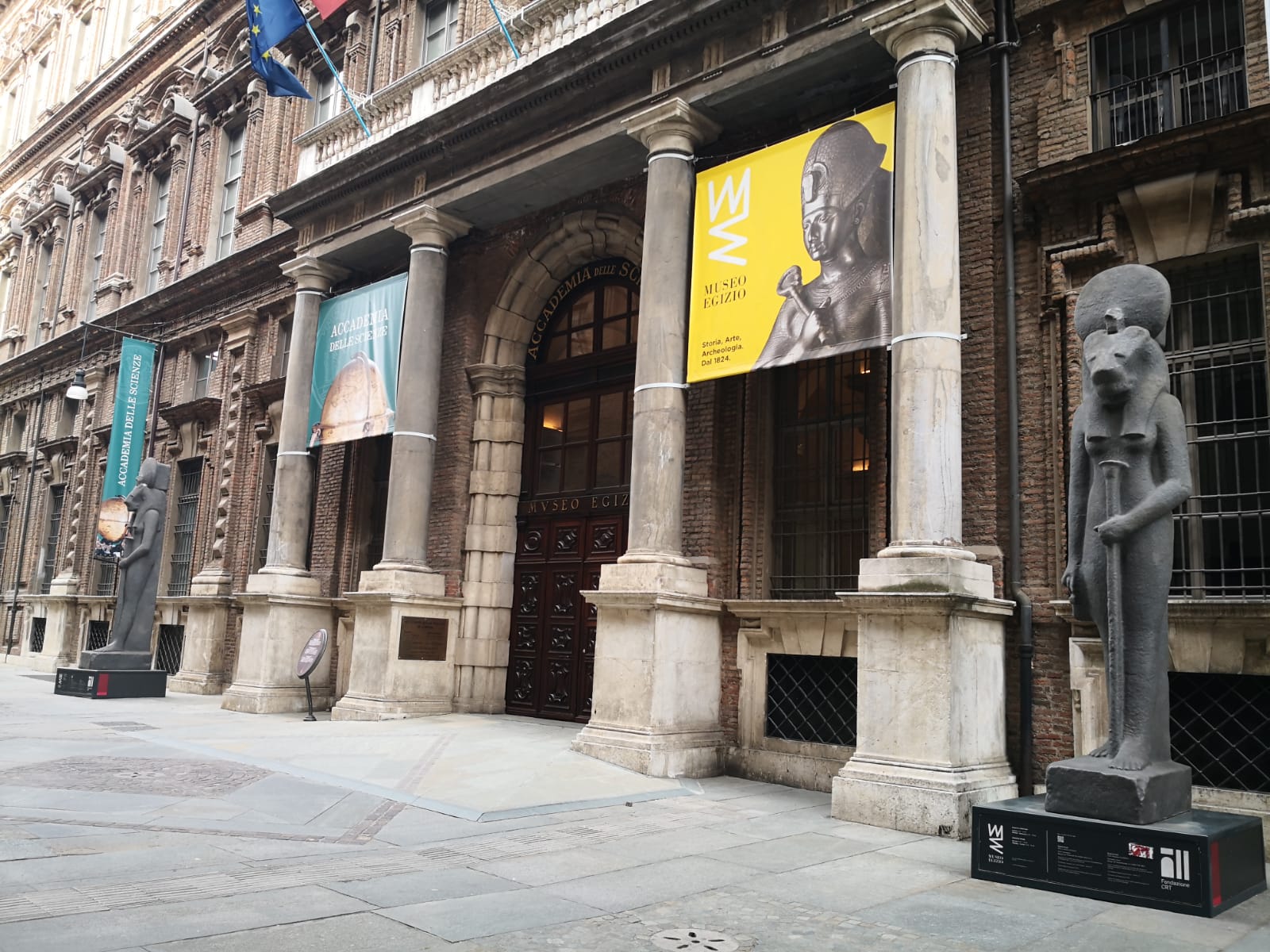
In the 1960s, construction of the Aswan High Dam threatened monuments across Nubia. UNESCO led an international rescue campaign, best remembered for the relocation of the temples at Abu Simbel. In gratitude for Italy’s contribution, Egypt donated the rock-cut temple of Ellesiya in 1966. It was moved, reassembled inside Turin’s Museo Egizio and inaugurated in 1970. The chapel reopened to the public in 2024 after restoration.
The story of Ellesiya · Museo Egizio ↗In September 2026, to celebrate our fortieth wedding anniversary, I finally travelled to Egypt. I remembered the little girl, her words and the promise she had made.
The Grand Egyptian Museum in Giza, inaugurated in 2025, is the largest archaeological museum devoted to a single civilisation. The museums in Turin and Giza have different histories and purposes.
Among the photographs from my visit to the Grand Egyptian Museum, the scribe stayed with me: a figure that makes everyday life in an ancient civilisation feel remarkably close.
Found in 1925 in the tomb discovered by Howard Carter in 1922, the young pharaoh’s funerary mask is now among the treasures displayed at the Grand Egyptian Museum in Giza.
The mask in the Grand Egyptian Museum’s official collection ↗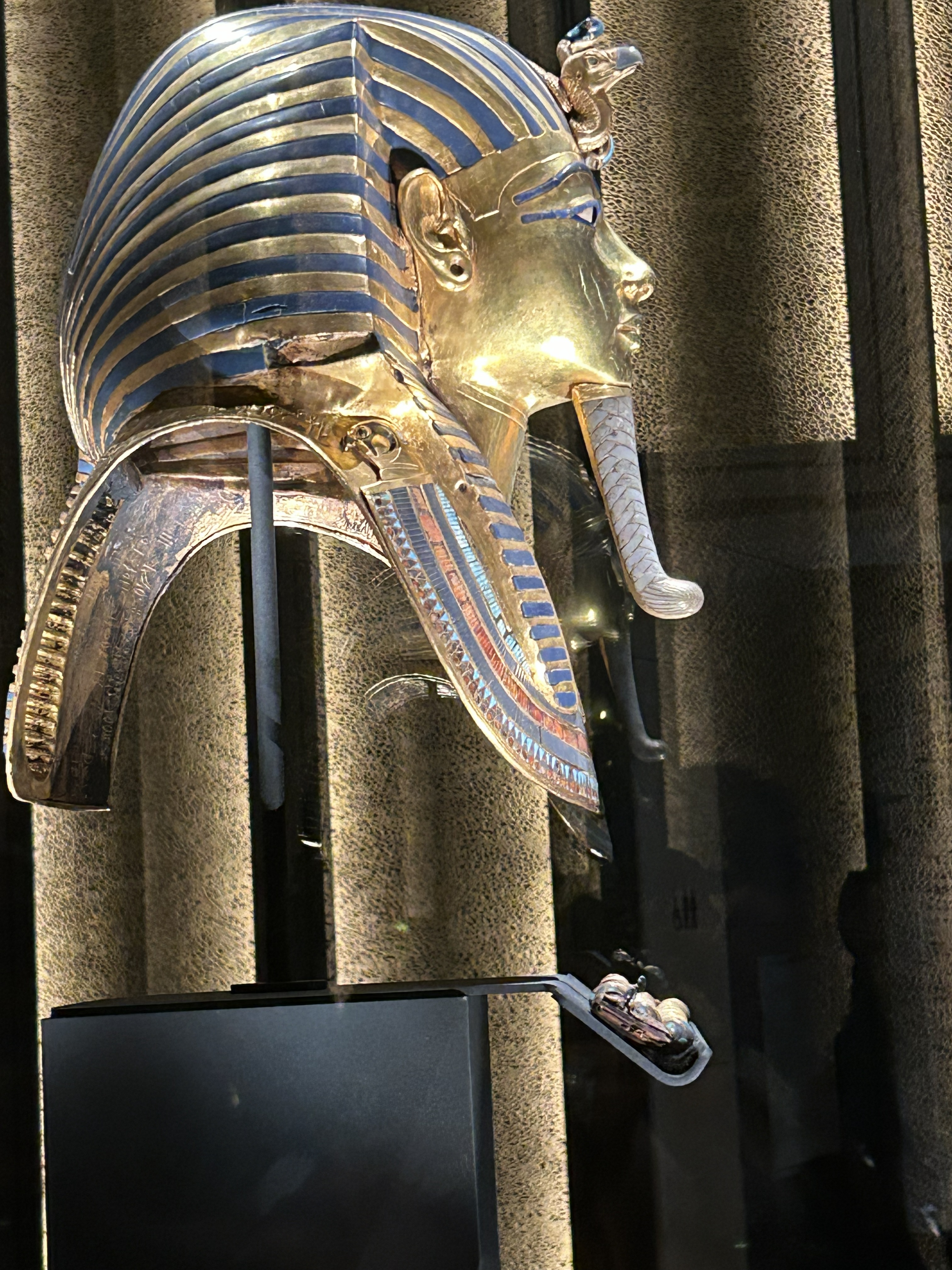
At six, I did not yet know how to distinguish ancient objects from the places they came from. But I already knew I wanted to see the world for myself. I still do.